
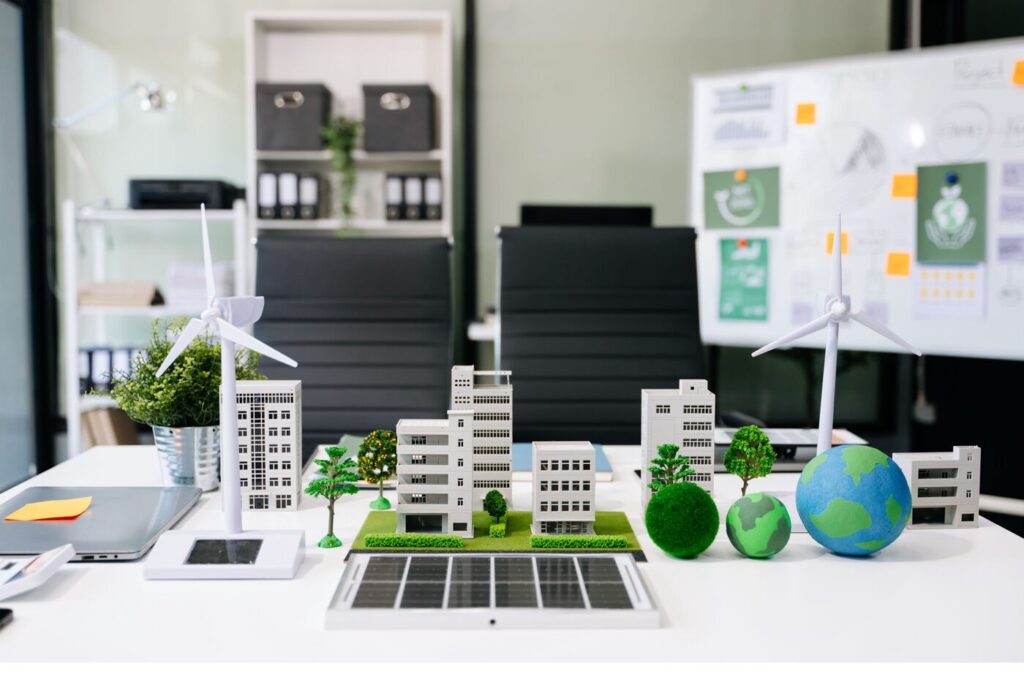
The construction industry is evolving fast. More and more contractors and developers are adopting sustainable materials and new technologies to shorten schedules, improve energy efficiency, and reduce environmental impact. Solutions like cross-laminated timber (CLT), prefabricated systems, and building-integrated photovoltaics (BIPV) are no longer niche—they’re becoming mainstream.
But innovation also reshapes a project’s risk profile. Understanding how these changes affect your insurance program is key to avoiding unexpected losses and costly delays.
What’s changing—and why it matters for insurance
Materials with a shorter performance track record
Cross-laminated timber (CLT) and other bio-based products bring structural and environmental advantages, but they can be especially sensitive to moisture during construction. Prolonged exposure to rain or improper storage can lead to mold, warping, or reduced strength if drying and on-site protection aren’t managed correctly.
Building-envelope integrated technology (BIPV)
When solar panels are part of the roof or façade, they’re no longer “just an energy system”—they become a building component. That means they must meet both building code requirements and photovoltaic standards, particularly around fire performance, impact resistance, wind uplift, and hail exposure. Poor design or installation can result in significant damage and complex claims.
Electrical risks and commissioning exposures
Modern projects carry a high concentration of risk during testing and commissioning. Inverters, batteries, electrical switchgear, and control systems are critical at this stage. Many property policies exclude certain electrical or mechanical failures, so this exposure often needs to be addressed specifically.
Greater reliance on technology—and cyber risk
Using BIM, tablets on site, and building management systems (BMS/IoT) can improve efficiency, but it also introduces risks like intrusion, fraud, and operational disruption. Smart building systems have shown vulnerabilities that can create losses that extend beyond “purely digital” impacts.
New York legal context: work-at-height liability
In New York, Labor Law §§ 240/241—commonly known as the Scaffold Law—imposes near-absolute liability for certain work-at-height accidents. This directly impacts limits, deductibles, and the overall structure of liability programs for projects that incorporate new construction techniques.
Where losses typically start
On projects using sustainable materials and advanced technology, the most frequent losses often involve:
- Moisture damage to CLT or insulation before the envelope is closed, leading to repair costs, mold remediation, and delays.
- Fires, electrical failures, or hail damage affecting PV systems integrated into roofs or façades.
- Damage to prefabricated modules during transport, lifting, or installation—especially while they are “in the hook” (handled by a crane).
- Work stoppages triggered by failures of critical equipment during commissioning.
- Intrusions into BMS/IoT systems that disrupt operations or expose sensitive data.
Does your insurance program cover these risks?
Often the answer is yes—provided the program is properly structured and includes the right endorsements for each phase of the project.
Key coverages typically include:
- Builder’s Risk (course of construction) that includes testing & commissioning, soft costs, and delay in start-up (DSU), with appropriate limits for transit and off-site storage.
- Inland Marine / Installation Floater, essential for prefabrication during manufacturing, transportation, and installation. If cranes are used or third-party property is handled, adding riggers liability is often recommended.
- Equipment Breakdown, especially relevant during testing and commissioning of electrical and mechanical equipment.
- Contractor’s Professional Liability (E&O) for design-build projects or BIM coordination responsibilities.
- Contractors Pollution Liability (CPL) for mold risk, waste, and battery handling exposures.
- Cyber Insurance, both during construction and for the building once it’s operational.
- General Liability (GL) and Umbrella, aligned with owner/GC contract requirements, taking into account the impact of NY Labor Law §§ 240/241.
A real case with clear lessons
In 2019, Walmart filed a lawsuit against Tesla following a series of fires tied to rooftop solar systems installed on several stores. While these were not façade BIPV installations, the case highlighted the risks of integrating solar technology into the building envelope without strict controls on design, installation, and maintenance. The dispute was later resolved, but it left clear lessons about quality control and the importance of a well-designed insurance program.
Studies from the U.S. Department of Energy (DOE) and NREL have also shown that extreme weather events—such as hail—can damage solar modules even when there are no obvious visible fractures, reinforcing the need for proper testing and coverage tailored to higher-risk areas.
Common mistakes that drive up project costs
Some frequent missteps that lead to avoidable costs include:
- Assuming an “all-risk” Builder’s Risk policy automatically covers testing, commissioning, or DSU.
- Failing to disclose prefabrication processes or off-site storage exposures.
- Installing integrated solar systems without confirming fire/impact testing and without adding equipment breakdown where appropriate.
- Underestimating the cyber exposure of smart building systems.
Conclusion
Sustainable, technology-forward construction brings major benefits—but it also redefines a project’s risk profile. Moisture sensitivity in CLT, electrical and mechanical exposures in solar systems, and increased technological dependence all call for an insurance program that matches the realities of modern jobsites.
At Rondon Brokerage, we help contractors and developers review projects by phase—manufacturing, transit, construction, commissioning, and handover—and adjust coverage so innovation is also protected.
If you’d like, contact us to review your project before an emerging risk turns into an unexpected loss.