
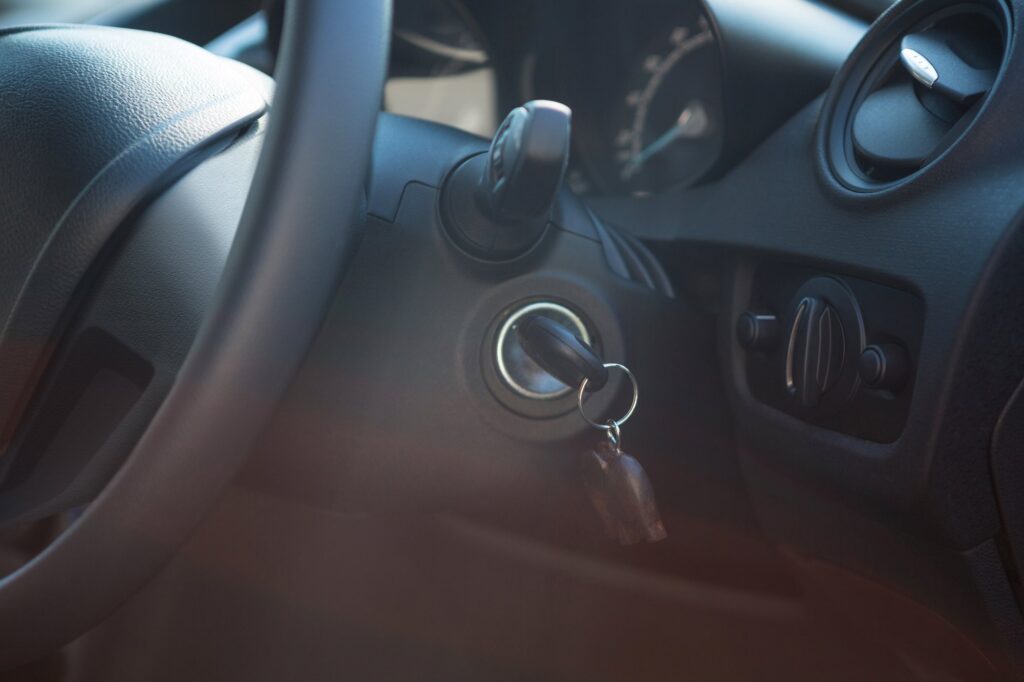
In an auto repair shop, a detailing business or any vehicle maintenance operation, the workday is spent among cars that belong to someone else. The customer pulls in, hands over the keys, explains the problem and leaves, confident the vehicle is in good hands. For the shop owner, it’s routine. For the customer, it’s one of their most important assets in someone else’s care.
What rarely crosses anyone’s mind at that moment is that, from the second the keys change hands, the car becomes the shop’s responsibility, even though it still belongs to the customer. Many owners assume the business’s general policy covers that situation. In most cases it doesn’t, and the gap tends to surface on a Monday morning, when someone calls to say their car isn’t where they left it.
What the law presumes when a car doesn’t come back the same
In New York, handing a vehicle over for repair creates what courts call a bailment: the shop takes possession of someone else’s property and takes on the duty to return it in the condition it was received. If the car isn’t returned, or comes back damaged, the law presumes the shop was negligent. The customer doesn’t have to prove carelessness. The shop has to show it exercised due care.
A Brooklyn appellate court applied exactly that rule in Brinson v. Lowe (2010), where a customer sought $16,025 for damage to her car, which was vandalized while at a repair shop. The shop’s owners never appeared in the case, and the court found their liability established, relying on earlier decisions to the same effect. The case is old, but it shows how these claims are framed: the car was in the shop’s custody, and that was enough to put the shop on the hook.
Why the general policy doesn’t respond
A general liability policy protects a business against damage it causes to third parties, but it typically excludes property in the business’s care, custody or control, as well as vehicles. A customer’s car sitting in your shop falls into both categories. That’s why a specific coverage exists for this exposure.
What Garage Keepers is and how it’s structured
Garage Keepers liability covers damage to customers’ vehicles while the business has them in its care to repair, service, park or store. Depending on the option chosen, it can respond to fire, theft and vandalism, to collision, or to nearly any cause other than collision and overturn. The most important decision, though, is the basis on which it pays.
Legal liability. Pays only when the shop is legally responsible for the damage. It’s the least expensive option, but it means arguing over negligence, which, as we just saw, is the very point the shop has to prove.
Direct primary. Pays for damage to the vehicle regardless of fault, without waiting for liability to be sorted out. It costs more, but it settles claims quickly and protects the customer relationship.
Direct excess. Pays only after the customer’s own insurance responds. It’s usually a middle-ground option on price, but it relies on the customer having coverage of their own, and sometimes that means the customer has to file a claim and pay a deductible for something that happened at your shop.
What usually falls outside
Garage Keepers is a specific coverage, but it isn’t all-encompassing. These are the points where misunderstandings come up most.
What the customer left inside the car. Tools, merchandise, equipment, personal items. The coverage focuses on the vehicle and its equipment, not its contents.
The work itself. If a repair goes wrong, the cost of redoing it, or the damage caused when it fails, isn’t a Garage Keepers matter. That risk is handled elsewhere in the business’s insurance program.
Employees’ cars. Staff members’ personal vehicles, worked on at the shop, are normally not covered.
Keys. Replacing keys, reprogramming systems or changing locks after a loss usually requires a specific endorsement, and some carriers tie theft coverage to a certain level of key control. Terms vary by carrier, and they’re worth reading before a claim, not after.
Per-location limit and deductible. The limit applies per location, and a single event (a fire, a flood, a break-in at the lot) can hit several cars at once. Make sure the limit reflects the most vehicles you actually have at one time, and that any separately rented lot or garage is declared.
Test drives, transfers and New York streets
For many businesses, the risk doesn’t stay inside the shop. Moving a car to the lot, taking it out on a test drive, sending it to another shop for specialty work, or parking it on the street because there’s no room are everyday situations, and each one changes who responds and under which part of the policy. A crash during a test drive combines damage to third parties and possible injuries, which fall under the business’s liability coverage, with damage to the customer’s car, which falls under Garage Keepers. On top of that, many carriers require that anyone driving customers’ vehicles meet certain standards, such as a valid license and a clean record. In a city with narrow streets, heavy traffic and little space, these aren’t exceptions. They’re part of the day.
What to review
These are less a checklist than questions worth asking calmly:
- Whether your current policy includes Garage Keepers, and on what basis: legal liability, direct primary or direct excess.
- Whether the per-location limit covers the most vehicles you have at once, in the shop and on the lot.
- How keys are handled: where they’re kept, who has access, and whether the policy requires any controls.
- Who drives customers’ vehicles, and under what rules, for both test drives and transfers.
- Whether you keep a record of the car’s condition when it comes in, such as photos and a signed work order.
Customers trust a shop for the quality of its work, but that trust is sustained by how the business responds when something goes wrong. Knowing in advance who pays, with what, and under what conditions is part of the craft, just like knowing how to diagnose an engine.
At Rondon Brokerage, we’re here to help you understand risk and protect what matters most.